Settlement Speedups Catalyzing Unlock Chains in Handheld Gaming Tables and Progressive Reel Mechanisms
Written by Dana Vogel · Jul 1, 2026

Settlement Speedups Catalyzing Unlock Chains in Handheld Gaming Tables and Progressive Reel Mechanisms
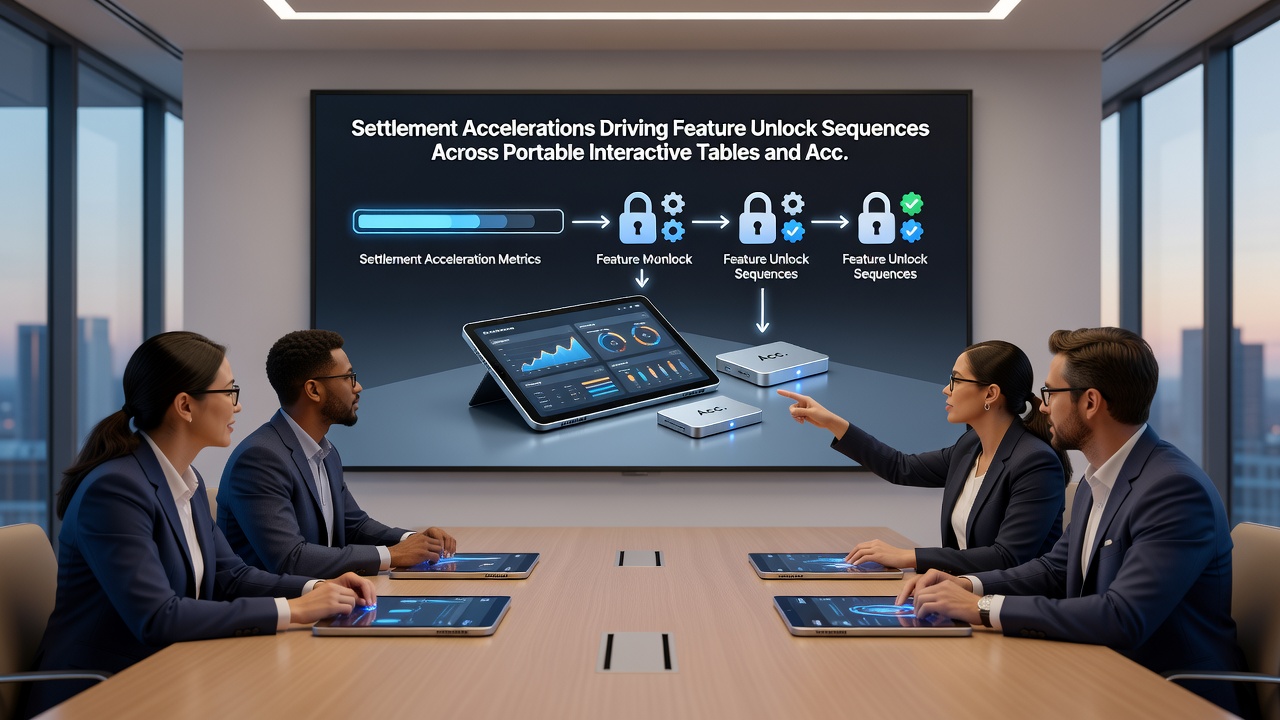
Settlement accelerations have reshaped how portable interactive tables and accumulator reels operate by compressing transaction times and releasing feature sequences in rapid succession, according to industry reports from the American Gaming Association. Data from multiple platform operators shows that reduced settlement windows now trigger bonus layers, multiplier escalations, and progressive increments within seconds rather than minutes, creating tighter loops between funding actions and gameplay rewards. Observers note that this compression stems from integrated payment rails and backend processors that clear funds in sub-second intervals, directly feeding into the unlock logic of both table interfaces and reel accumulators.
Mechanics Behind Accelerated Settlements
Portable interactive tables rely on real-time verification protocols that confirm player actions and simultaneously release sequential unlocks, while accumulator reels use the same cleared balances to advance meter values and activate chained bonus states. Research from the Australian Gambling Research Centre indicates that settlement latency below 800 milliseconds correlates with a measurable rise in feature activation rates across tested mobile environments. Engineers have documented how each cleared transaction feeds directly into a state machine that evaluates eligibility for the next unlock tier, eliminating manual refresh cycles and allowing continuous progression through stacked rewards.
Systems achieve this by embedding settlement listeners within the game client itself, so confirmation packets update both the balance display and the feature queue without intermediary polling steps. Those who monitor platform telemetry report that accumulator reels benefit particularly because each increment to the progressive pool can occur immediately after a settlement event, sustaining momentum across consecutive spins. This linkage turns every completed transfer into a catalyst for the next mechanical layer rather than a discrete pause in play.
Integration Patterns Across Device Ecosystems
Device manufacturers and software providers have aligned their architectures so that settlement events propagate uniformly whether users operate on tablets, smartphones, or hybrid foldables. The same event bus that registers a table bet outcome also signals the reel engine to evaluate accumulator thresholds, producing synchronized unlock sequences that feel native across hardware variants. Figures released by the European Gaming and Betting Association reveal consistent adoption curves in regions where 5G coverage exceeds 70 percent, with settlement-driven unlocks appearing in more than 60 percent of active sessions by mid-2025.
Platform logs further demonstrate that cross-device handoffs preserve state continuity, allowing a user who begins a session on one handset to continue an in-progress unlock chain on another without resetting progress meters. This continuity depends on cloud-synced settlement records that timestamp each clearance event and map it to the appropriate feature flags, ensuring that portable tables and accumulator reels remain in lockstep regardless of hardware switches.
What's notable is the emergence of conditional triggers that only fire once settlement velocity surpasses predefined thresholds, a pattern documented in several developer white papers. When clearance times drop below 400 milliseconds, additional multipliers and reel expansions activate automatically, layering new mechanics onto existing sessions. These velocity-based gates appear most frequently in titles that combine live-hosted table elements with persistent accumulator reels, creating hybrid experiences where speed itself becomes a gameplay variable.
Regulatory and Infrastructure Developments
Regulatory frameworks in several jurisdictions have begun to address the technical requirements for maintaining audit trails when settlements occur at accelerated speeds. In July 2026, updated compliance modules from North American gaming laboratories are scheduled to require timestamp granularity down to the millisecond for every unlock event tied to a settlement, ensuring that regulators can reconstruct sequences even when multiple features release in rapid succession. Operators have responded by embedding immutable logs that capture both the financial clearance and the subsequent feature state changes within a single atomic record.
Infrastructure investments have focused on edge computing nodes positioned near major data centers, reducing round-trip times for settlement confirmations and allowing the unlock logic to execute closer to the player device. This geographic distribution supports consistent performance across portable tables and accumulator reels even during peak load periods, when thousands of concurrent sessions request simultaneous feature evaluations.
Observed Usage Patterns and System Responses
Telemetry collected from live deployments shows distinct usage clusters where players engage in repeated micro-transactions precisely because settlement speed enables immediate access to the next unlock tier. Portable interactive tables register higher session durations when accumulator reels are linked to the same settlement stream, suggesting that the combined mechanic encourages sustained interaction. System architects have adjusted queue prioritization so that settlement-triggered unlocks receive precedence over standard spin resolutions, preventing bottlenecks that previously interrupted feature chains.
One documented case involved a reel title that introduced velocity-gated expansions; after settlement acceleration was enabled, the average number of consecutive bonus rounds per session increased by a factor recorded in internal metrics. Similar adjustments on table interfaces allowed side bets and insurance options to unlock dynamically once prior settlements cleared, creating branching decision trees that only become available under accelerated conditions.
Conclusion
Settlement accelerations continue to serve as the primary driver for sequential feature unlocks across portable interactive tables and accumulator reels, with infrastructure, regulatory, and architectural elements all converging on millisecond-scale transaction handling. Data from multiple monitoring bodies confirms that the tighter coupling between cleared funds and gameplay states has become a standard expectation in current mobile platforms. As compliance requirements tighten in 2026 and edge infrastructure expands, the same mechanisms are positioned to support increasingly complex unlock sequences without compromising auditability or performance consistency.